
Pranjal Borah
pranjalborah1988@gmail.com
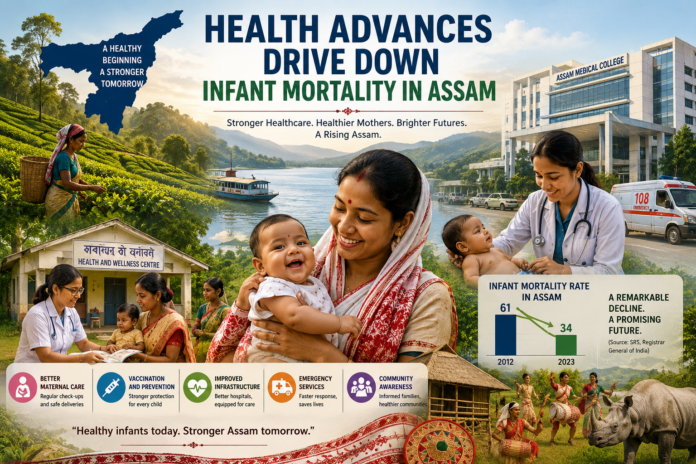
Assam has made significant strides in improving child health outcomes, with the latest data released by the Central government showing a steady decline in the State’s Infant Mortality Rate (IMR) over the past several years. The figures reflect the impact of sustained efforts in strengthening healthcare infrastructure, expanding maternal and child health services, and improving access to medical care across the State. According to the latest estimates, Assam’s Infant Mortality Rate declined to 29 deaths per 1,000 live births in 2024, marking a substantial improvement from 41 deaths per 1,000 live births recorded in 2018. The State has witnessed a consistent downward trend over the years, with the IMR decreasing from 40 in 2019 to 36 in 2020, 34 in 2021, 32 in 2022, 30 in 2023, and finally 29 in 2024.
The reduction represents a major public health achievement, particularly considering that Assam had long struggled with one of the highest infant mortality rates in the country. The latest figures indicate that the State is gradually narrowing the gap with national health indicators. A closer look at the data reveals a significant disparity between rural and urban areas. While the IMR in urban Assam dropped to an impressive 14 deaths per 1,000 live births in 2024, the corresponding figure for rural areas stood at 31. The difference of 17 points is the highest rural-urban gap recorded among Indian states, highlighting the need for focused interventions in rural and remote regions where healthcare access remains comparatively limited. Over a longer period, the improvement becomes even more striking. Assam’s average IMR declined by 42.4 per cent between 2012-14 and 2022-24, falling from 52.8 to 30.4 deaths per 1,000 live births. During the same period, the rural IMR decreased by 42 per cent, while urban areas recorded an even sharper decline of 51.8 per cent. Nationally, the average IMR fell by 37.4 per cent during the decade, indicating that Assam’s rate of improvement has surpassed the national average.
Also Read: Major ISI-Dawood Terror Plot Foiled; Nine Suspects Arrested
Despite these encouraging gains, the data also points to continuing challenges in neonatal healthcare. Assam’s Neonatal Mortality Rate, which measures deaths occurring within the first 28 days of life, stood at 20 per 1,000 live births in 2024. Notably, neonatal deaths accounted for nearly 69.4 per cent of all infant deaths in the State, underscoring the critical importance of quality maternal care, safe deliveries, and specialized newborn healthcare services. The State’s Early Neonatal Mortality Rate was recorded at 14, while the Perinatal Mortality Rate stood at 19. Assam also reported a stillbirth rate of five per 1,000 births. These indicators suggest that while substantial progress has been made, greater emphasis is needed on healthcare interventions during pregnancy, childbirth, and the immediate postnatal period.
The report also highlights improvements in broader health indicators. Assam’s Under-Five Mortality Rate declined to 34 in 2024, with urban areas recording a significantly lower figure of 16 compared to 36 in rural areas. Meanwhile, the State’s Crude Death Rate stood at 6.1, lower than the national average of 6.4. Significantly, Assam recorded a 17.1 per cent decline in its Crude Death Rate between 2012-14 and 2022-24, the highest reduction among larger states and Union Territories in the country. Demographic data further reveals a favourable population structure. Around 67.1 per cent of Assam’s population falls within the working-age group of 15-59 years, slightly higher than the national average of 66.4 per cent. This demographic advantage, combined with improving health indicators, could contribute positively to the State’s future economic and social development. The latest figures demonstrate that Assam has made notable progress in reducing infant and child mortality. However, the persistent rural-urban gap and the high share of neonatal deaths indicate that continued investments in healthcare infrastructure, maternal health programmes, skilled birth attendance, and newborn care services will remain crucial. Sustaining these efforts will be essential for ensuring that every child in Assam has a healthier start to life.
