
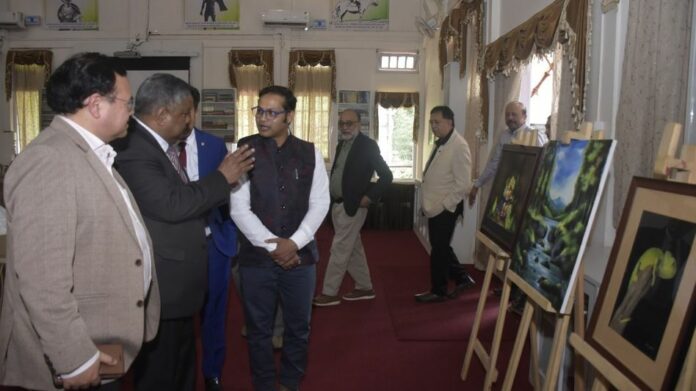
Shillong, April 16: A World Art Day celebration in Shillong on April 15 brought together artists, cultural practitioners and officials, with discussions centring on the lack of institutional backing for the arts in the Northeast despite the region’s strong creative output.
The programme marked the birth anniversary of Leonardo da Vinci and commemorated 150 years of Vande Mataram, linking global artistic traditions with India’s cultural heritage. Former Meghalaya Assembly Speaker Charles Pyngrope, who attended as chief guest, underscored the enduring influence of art in shaping societies and described Vande Mataram as a powerful cultural force during India’s freedom movement. He also referred to Shillong’s natural landscape as “a vast natural canvas”.
Participants from the International Association of Art – India highlighted the need for structured initiatives to promote artists from the region. The association’s president, Manaj Saha, noted that while artistic standards in the Northeast are on par with national and international benchmarks, artists continue to face limited exposure and opportunities.
Concerns over inadequate infrastructure were echoed by Raphael Warjri, who pointed out the absence of sufficient galleries and institutional frameworks in the state despite Shillong’s long-standing cultural significance. He said earlier efforts had not translated into a sustained support system for artists.
A memorial exhibition featuring works by around 40 artists from Meghalaya and across India formed a key part of the event, showcasing a blend of contemporary and traditional practices. The programme also included a series of art talks, with speakers such as Meghali Goswami discussing the history of art in Meghalaya, while Shovin Bhattacharjee examined emerging trends in digital art. Artist Prakash Kishore reflected on his creative journey, and Arak M. Sangma presented insights into Garo folk traditions.
The event concluded with remarks by Meghalaya Chief Electoral Officer B. D. R. Tiwari, who spoke on the continuity and evolution of Indian art, highlighting its enduring cultural and philosophical relevance. Performances of Vande Mataram by artists led by Silbi Passah framed the programme, reinforcing its cultural theme.
While celebrating artistic diversity, the event also underscored a broader concern: the need for sustained institutional support to ensure the continued growth and visibility of the Northeast’s artistic community.
